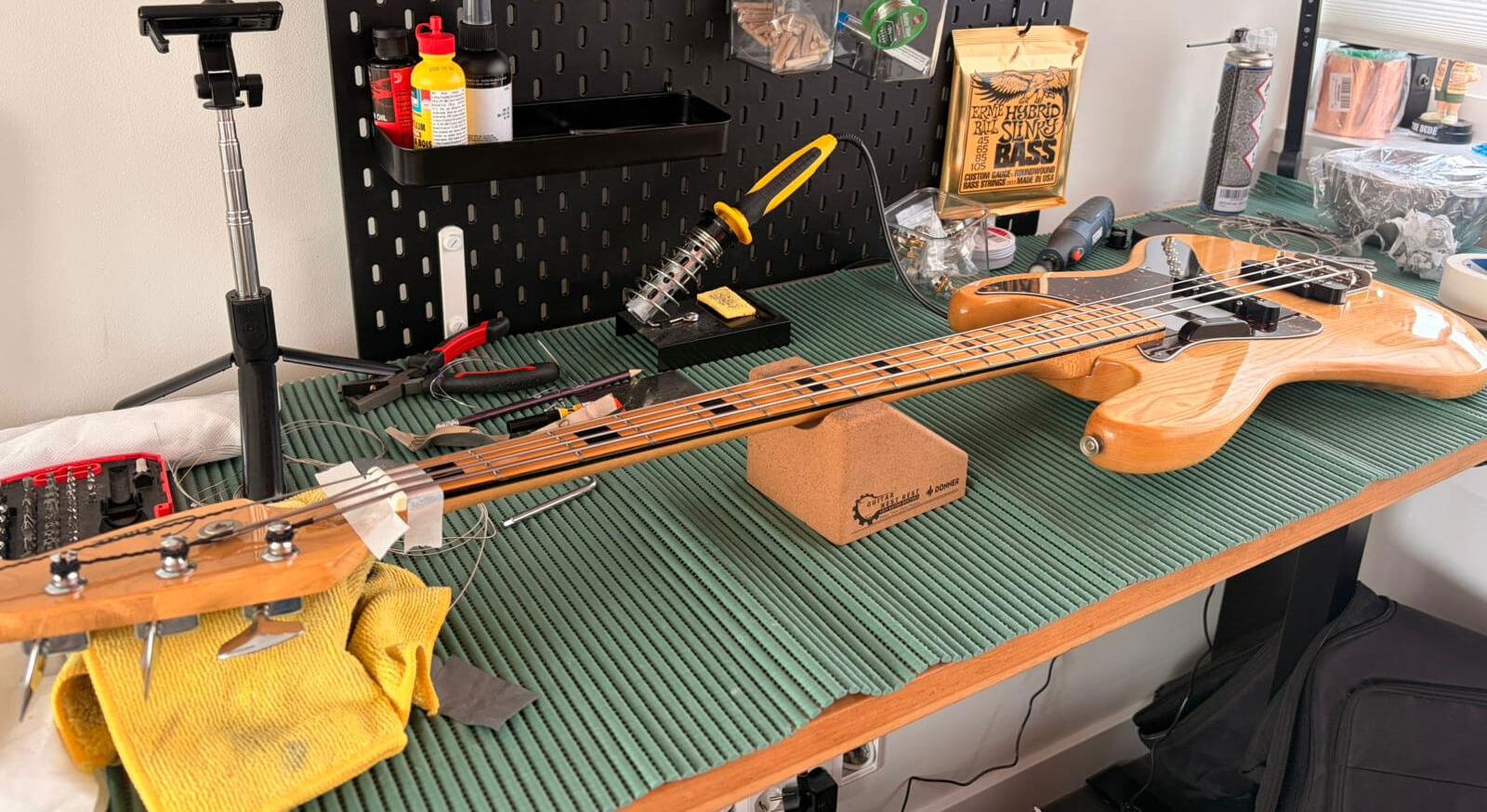
Walk into a guitar shop and the first string brand you’ll probably see is Ernie Ball. Ask the person behind the counter what to put on your electric guitar, and there’s a good chance they’ll say: Regular Slinkys.
There’s a reason for that. Regular Slinkys have been around for more than 60 years and are among the most popular electric guitar strings in the world. In this post we look at why, and whether they’re the right choice for your guitar.
What Are Ernie Ball Regular Slinkys?
Ernie Ball Regular Slinkys are a set of nickel-wound electric guitar strings in a 10-46 gauge:
- High E: .010
- B: .013
- G: .017
- D: .026 (wound)
- A: .036 (wound)
- Low E: .046 (wound)
The three treble strings are plain steel. The three bass strings are nickel-plated steel wrapped around a hex core. Together they give Regular Slinkys their character: bright, balanced and responsive.
They’re made for standard tuning and suit almost any electric guitar: Stratocaster, Les Paul, SG, Telecaster, PRS and everything in between.
A Short History of Ernie Ball
In the 1950s and early 1960s, rock guitarists had few options for light strings. Sets were heavy and stiff, and not made for the bending and expressive playing that rock and roll was starting to demand.
Ernie Ball, a guitarist and teacher, saw the gap. He began selling lighter strings, and offering individual strings so players could build their own sets. Word spread fast, the Slinky range was born and the guitar world changed.
Since then Ernie Ball strings have been used by players including Eric Clapton, Jimmy Page, Slash, John Mayer and Steve Vai, along with millions of guitarists at every level.
Why 10-46 Is the “Just Right” Gauge
String gauge is one of the biggest decisions you’ll make for your guitar, and 10-46 is the sweet spot for a huge number of players. (For the full picture on gauges and materials, see our guide to choosing guitar strings.)
The balance between playability and tone
Lighter strings (9-42) are easier to bend but can feel thin and break more easily. Heavier strings (11-49) have more mass and sustain but need more finger strength.
Regular Slinkys sit right in the middle. A full-step bend on the high E doesn’t take much effort, but they still feel solid and sound full.
Great in standard tuning
In standard tuning, the tension of a 10-46 set is nicely balanced across all six strings, so your neck relief and intonation behave predictably. Drop D works well too. Go much lower than a full step down and you’ll want a heavier set.
Fits most guitars’ factory setup
Most electric guitars leave the factory set up for 9-42 or 10-46. If you switch to Regular Slinkys from a similar gauge, you’re unlikely to need big adjustments, although a quick check of the intonation and action is always a good idea. That’s exactly what we do in a GuitarBuddy setup.
What Do Regular Slinkys Sound Like?
The secret is the nickel-plated steel windings. Pure nickel sounds warmer and more vintage. Stainless steel is brighter and more aggressive. Nickel-plated steel sits in between, with a clear top end and enough warmth in the mids and lows to sound musical in any style.
You get:
- Clarity on single notes and lead lines
- Warmth on chords and rhythm parts
- Good sustain without sounding squashed
- Responsiveness to your picking: dig in and they sing, play softly and they stay sensitive
They sound great clean, with a bit of crunch and with heavy distortion. That versatility is a big part of why they’ve lasted so long.
How Long Do They Last?
Like all uncoated strings, Regular Slinkys start to lose their sparkle with regular playing, usually within one to four weeks, depending on how much your hands sweat and how often you play.
To make them last longer:
- Wash your hands before playing. Skin oil and dirt are the main enemies of strings.
- Wipe the strings after every session with a dry microfibre cloth.
- Use a string lubricant to keep them smooth and slow down corrosion.
- Change them regularly. Old strings sound dull and can hurt your tuning and intonation. Once a month is a good starting point for most players.
If you want longer-lasting strings and don’t mind paying a bit more, Ernie Ball also makes coated Paradigm strings. For value and that classic sound, though, the uncoated Regular Slinky is hard to beat.
Who Are Regular Slinkys For?
- Beginners: yes. The 10-46 gauge is forgiving while you build finger strength, without feeling like sewing thread. They’re also affordable, so changing them often won’t hurt.
- Intermediate players: reliable tone and feel, whether you’re practising, playing in a band or recording at home.
- Advanced and professional players: many pros use them for their whole careers. They just work.
- Styles: rock, blues, pop, country, classic metal, indie, punk and alternative. For very low tunings like Drop B or C, go heavier.
Regular Slinky vs the Competition
| Strings | Gauge | Tone | Price |
|---|---|---|---|
| Ernie Ball Regular Slinky | 10-46 | Bright, balanced, versatile | Affordable |
| D’Addario EXL110 | 10-46 | Slightly warmer, very consistent | Similar |
| Elixir Nanoweb | 10-46 | Warmer, long-lasting (coated) | Premium |
| GHS Boomers | 10-46 | Bright and punchy | Similar |
Ernie Ball vs D’Addario is one of the great guitar debates, and both are excellent. Slinkys tend to feel a little brighter and snappier out of the packet; D’Addario is known for being very consistent from set to set. The best way to decide is to try both.
The Bottom Line
Ernie Ball Regular Slinkys are called the gold standard for a reason. They’ve been on the guitars of legends, they’re consistently made, and their tone and feel suit almost every player and style. If you don’t know which strings to put on your electric guitar, start here.
Buy Ernie Ball Regular Slinkys at GuitarBuddy
We stock Ernie Ball Regular Slinky strings with fast shipping across the Netherlands and Europe. Prefer something lighter or heavier? Try Super Slinky (9-42) or Beefy Slinky, or browse all our electric guitar strings.
Want Them Fitted?
Live near Zandvoort, Haarlem, Aerdenhout or Amsterdam? Bring your guitar in for a full setup. We’ll fit fresh Slinkys and get your action, intonation and neck relief just right. Book your guitar setup.