If you’ve just bought your first guitar, you’ve probably discovered that the accessory aisle is a rabbit hole. Strings, straps, tuners, and then a whole wall of small plastic triangles in every thickness, colour and shape you can imagine. Which plectrum (or pick) are you supposed to choose?
The good news is that it’s simpler than it looks. Here’s everything a beginner needs to know about choosing a plectrum for acoustic or electric guitar.
Do You Even Need a Plectrum?
For classical guitar, no. Classical technique is built around playing with the fingers and nails of your picking hand. A plectrum would change your tone and work against the technique. If you’re learning classical, skip the picks and look after your nails.
For acoustic and electric guitar, a plectrum is one of your most important tools. Whether you’re strumming chords, picking single notes or playing solos, the pick affects your tone, your speed and how the guitar feels.
Pick Thickness: The Most Important Choice
Thickness is measured in millimetres, and most picks are colour-coded so you can find your favourite quickly.
Thin picks (0.40 to 0.60 mm)
Thin picks are flexible. They bend as you strum, giving a bright, jangly sound with a nice “swish”. They’re forgiving and great for strumming open chords.
The downside is control. Single notes can feel a bit unpredictable, and thin picks wear out quickly.
Best for: acoustic strumming, complete beginners, folk and pop.
Medium picks (0.60 to 0.80 mm)
The best of both worlds: enough flex for comfortable strumming, enough stiffness for control over single notes. Most beginners end up here, and plenty of players never leave.
If you’re not sure where to start, choose a medium pick.
Best for: beginners on acoustic or electric, all-round rhythm and lead, rock and pop.
Heavy picks (0.88 mm and up)
Heavy picks barely flex, so more of your energy goes straight into the string. You get a fuller, rounder tone with more volume and sustain, and more precision for fast playing. That’s why they’re popular with electric lead players.
They’re less forgiving for strumming, though. Hit a chord at the wrong angle and you’ll hear it.
Best for: electric lead playing, rock and metal, players working on speed and articulation.
Pick Shape: Standard vs Jazz III
Most beginners start with the standard teardrop shape: wide at the top and pointed at the tip. It’s comfortable and works for almost every style.
The Jazz III shape is smaller and sharper. It sounds odd, but many fast lead players swear by it. With less pick between you and the string, you get tighter control and quicker alternate picking. It takes some getting used to, but plenty of players never go back.
Pick Material: Why Tortex Stands Out
Picks are made from nylon, celluloid, acrylic, Ultem and more, and each has its own feel and tone. One worth knowing is Tortex, which Dunlop developed as an alternative to real tortoiseshell (now, rightly, banned).
Tortex has a slightly matte surface that grips well even when your fingers get sweaty. It sounds bright and clear and keeps its shape for a long time. It’s a favourite across genres, from country to metal.
What GuitarBuddy Recommends for Beginners
We keep our pick range small and only stock what we’d recommend to a student or a friend: Dunlop Tortex picks in four thicknesses, all sold individually so you can try several without buying whole packs.
- Dunlop Tortex III .50 mm (red): the thinnest. Great for acoustic strumming and a bright, lively sound. Very beginner-friendly.
- Dunlop Tortex Jazz III .73 mm (yellow): a firm medium. Comfortable for strumming with enough stiffness to start on lead lines. A great all-rounder.
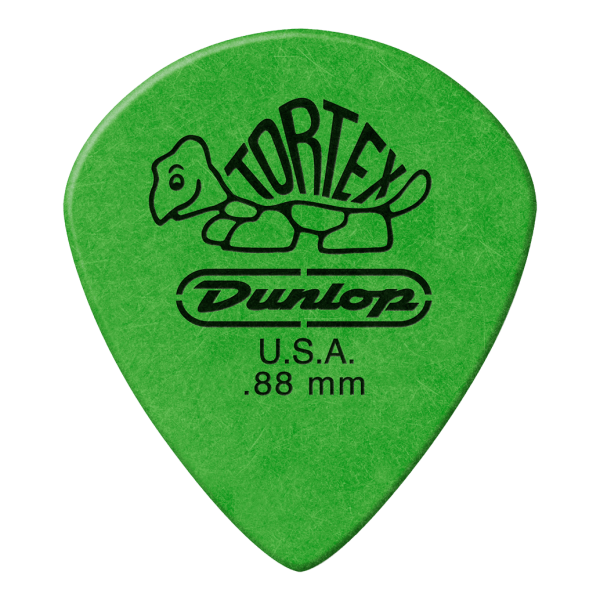
- Dunlop Tortex Jazz III .88 mm (green): heavier. Excellent for electric guitar, rock rhythm and developing your picking technique.
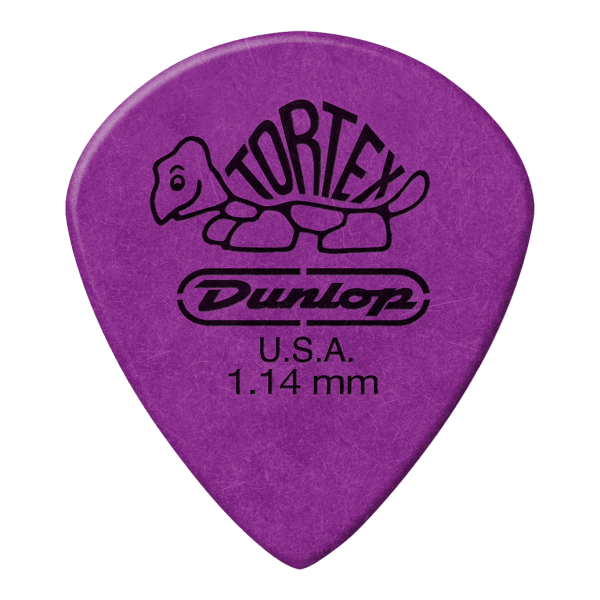
- Dunlop Tortex Jazz III 1.14 mm (purple): the stiffest. For lead players who want maximum precision and attack.
Browse them all in our guitar picks shop.
Practical Tip: Try a Few
The best pick is the one that feels right in your hand. Because we sell them individually, you can pick up two or three thicknesses for a few euros and spend a practice session with each. Listen to how the tone changes and notice whether you’re fighting the pick or working with it.
Most players find their favourite fairly quickly, and then keep a small stash of spares forever, because picks have a habit of disappearing.
Quick Reference: Pick Thickness at a Glance
| Thickness | Type | Best for |
|---|---|---|
| 0.40 to 0.60 mm | Thin | Acoustic strumming, beginners |
| 0.60 to 0.80 mm | Medium | All-round playing, acoustic and electric |
| 0.88 to 1.00 mm | Heavy | Electric rhythm, rock, developing technique |
| 1.00 mm and up | Extra heavy | Lead guitar, speed, heavier styles |
More for Beginners
Your strings matter just as much as your pick. Our guide to choosing guitar strings explains gauges and materials. And if your guitar feels hard to play, it’s often not you: many beginner guitars leave the factory with high action. A guitar setup can make a huge difference.
Questions?
Have a question about picks, strings or anything else? GuitarBuddy is based in Zandvoort and works with players in Haarlem, Aerdenhout and Amsterdam. Get in touch or take a look at our guitar setup and repair services.