Every week someone brings me a guitar that has been sitting in a corner since the day they “tried to learn”. Nine times out of ten the guitar was part of the problem, and the other part was not knowing what to practise. So this is the guide I wish every beginner got on day one: what to learn first, how much to practise, and how to get through the tricky first month.
Step 1: Make sure your guitar isn’t working against you
Before you blame your fingers, check the guitar. A lot of beginner guitars (and plenty of expensive ones) leave the factory with the strings sitting high above the frets. That means you have to press much harder, chords buzz, and your fingertips hurt twice as much.
- String height: if you can slide a business card under the strings at the 12th fret with lots of room to spare, the action is probably too high.
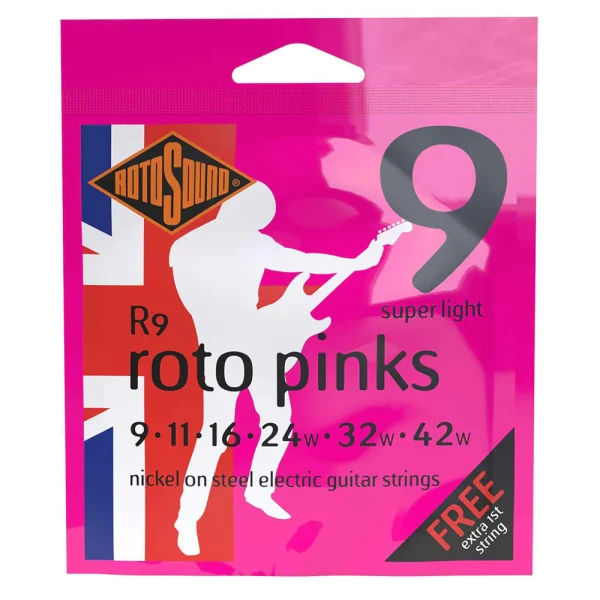
- Old strings: dull, rusty strings sound flat and won’t stay in tune. A fresh set of guitar strings makes a cheap guitar sound surprisingly good.
- Tuning: a guitar that is out of tune makes even perfect chords sound wrong. Tune up every single time you pick it up. You can use my free online guitar tuner right in your browser.
If your guitar is hard to play, a guitar setup is the best money a beginner can spend. It’s literally what I do all day, and the difference is night and day.
Step 2: Learn the basics in the right order
You don’t need theory, scales or a stack of books in week one. You need a few physical skills, in roughly this order:
- How to hold the guitar so your fretting hand can move freely and your wrist isn’t bent sharply.
- The string names: E A D G B E, from the thickest string to the thinnest. “Eddie Ate Dynamite, Good Bye Eddie” helps.
- Finger numbers: index is 1, middle is 2, ring is 3, pinky is 4. Every chord diagram uses them.
- Reading chord diagrams: the little grids that show where your fingers go. Five minutes of learning unlocks thousands of songs.
- Your first chords: E minor, A minor, D, G and C. With these five you can already play along with a huge number of songs.
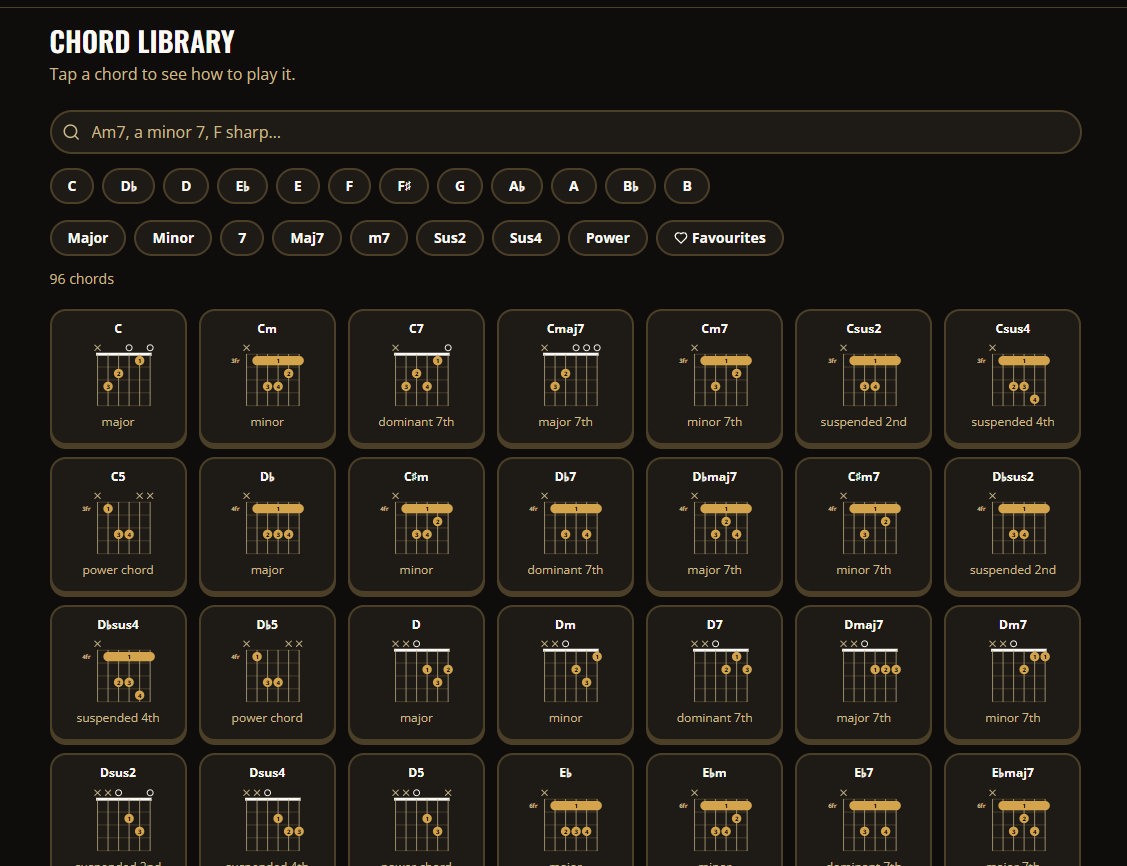
Start with E minor: just two fingers, and every string rings. Then add A minor, which shares a similar shape. You can look up every chord with diagrams and sound in my guitar chord library.
Step 3: Practise a little, every day
The biggest beginner mistake isn’t a technique problem. It’s practising for two hours on Saturday and not touching the guitar until next Saturday. Your hands learn through repetition and rest, so short daily sessions beat long weekly ones every time.
- Week 1: 10 to 15 minutes a day is plenty.
- Weeks 2 to 4: work up to 20 or 30 minutes, if your fingers allow it.
- Leave the guitar out on a stand, not in its case. If it takes ten seconds to pick up, you’ll play it a lot more often.
Step 4: Sore fingertips are normal (but don’t push through real pain)
Your fingertips will hurt for the first two to four weeks. That’s normal: your skin is building calluses, and once they’re there, the pain mostly goes away. A few things make it easier:
- Press just hard enough. Most beginners squeeze far too hard. Press until the note rings clearly, then try a little less.
- Play close to the fret, just behind the metal fret wire, not in the middle of the space. You need much less pressure there.
- Take breaks. Two sessions of ten minutes are kinder to your fingers than one of twenty.
- Lighter strings help, especially on an acoustic. Ask me which gauge suits your guitar.
Sharp pain in your wrist, hand or arm is not normal. Stop, shake it out, and check your posture before you carry on.
Step 5: Learn to change chords (this is the real skill)
Holding one chord is easy. Getting from one chord to the next in time is what makes music, and it’s where most beginners get stuck. Here’s the trick that works:
- Pick two chords, for example E minor and A minor.
- Set a timer for one minute.
- Switch between them as many times as you can, strumming once on each chord. Count the changes.
- Write the number down. Tomorrow, try to beat it.
This is the famous “one-minute changes” exercise, and it works because it measures something. Seeing your score go from 12 to 30 changes in a week is a great motivator. Go slowly at first: slow is smooth, and smooth is fast.
Step 6: Strum in time with a metronome
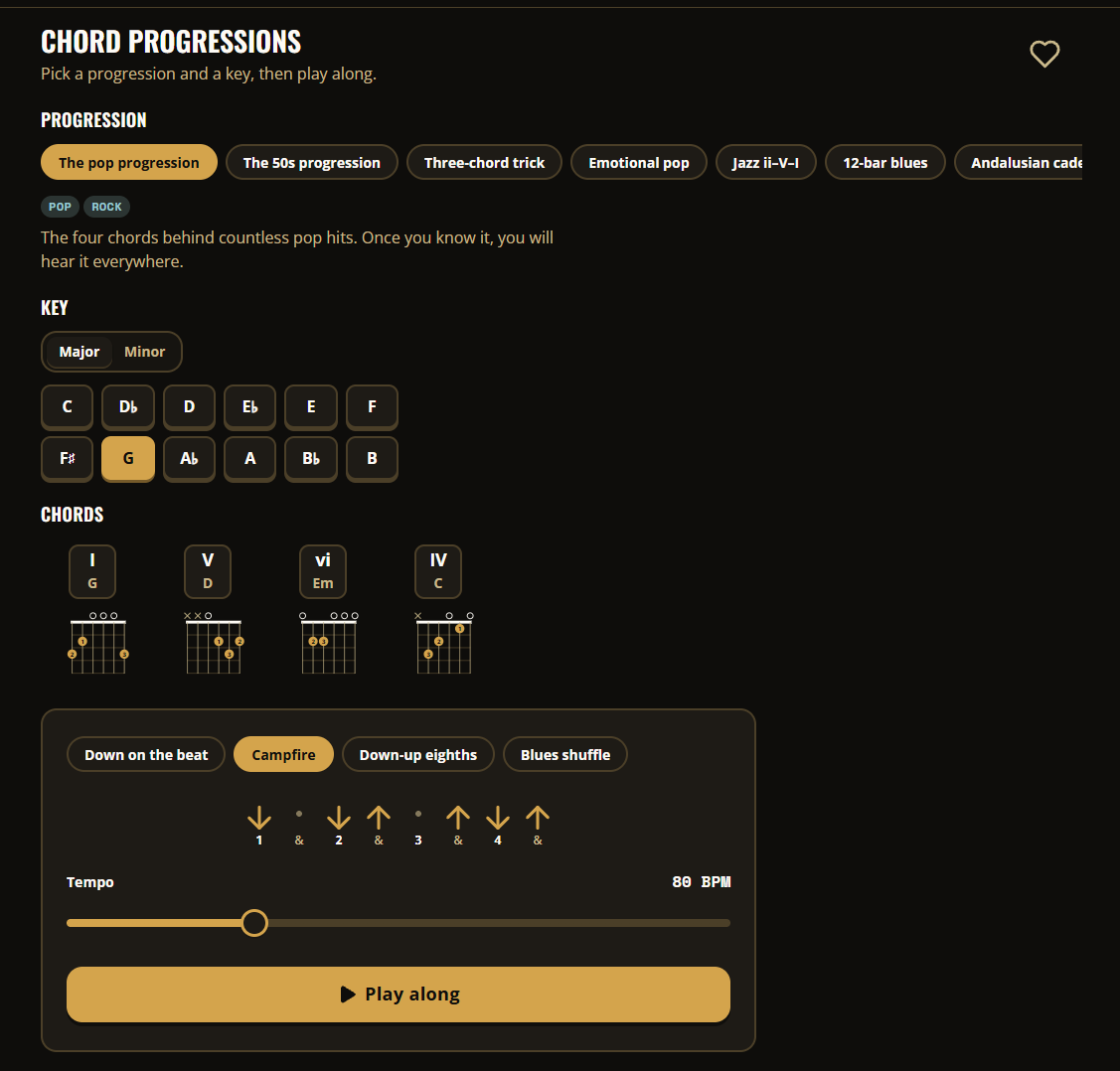
Once you can change chords, play along with a steady beat. Start with four down strums per chord at a slow speed, around 60 to 70 BPM, and only speed up when it feels easy. You can use my free online metronome for this. Keeping time is what makes your playing sound like music rather than a collection of chords.
The mistakes I see most often
- Skipping the tuner. Always tune first.
- Learning a song that’s too hard. Pick songs with two to four easy chords and a slow tempo, then build up.
- Only playing what you already know. It’s fun, but it isn’t practice. Spend at least half of each session on something that feels a bit hard.
- Looking at your fingers all the time. Try to look away for one change. Then two. Your hands will learn to find the shapes.
- Quitting in week three. This is when sore fingers and slow progress feel worst. It gets much easier soon after, I promise.
What to do next
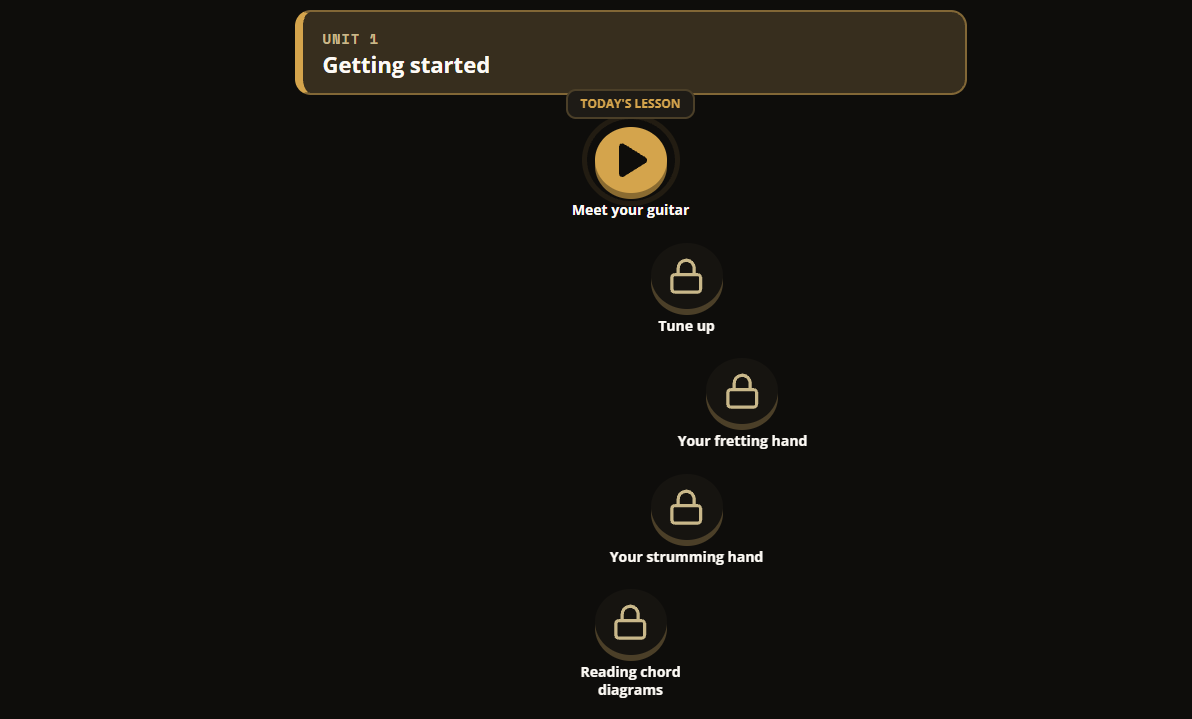
If you want a plan to follow, I built a free course for exactly this: 30 Days to Your First Songs, one short lesson a day inside the GuitarBuddy Play app. And once you’re comfortable with your first chords, read my guide to daily guitar exercises to keep your hands improving.
Got a guitar that’s fighting you? Book a setup and I’ll make it as easy to play as possible. You’ll be amazed how much faster you learn on a guitar that plays well.