Most guitarists don’t have a talent problem. They have a practice problem. They pick up the guitar, play the same riffs they already know, have a nice time, and wonder six months later why they haven’t improved. Playing is great, but it isn’t the same as practising.
Good practice has a plan, a purpose and a way to measure progress. Here’s how to build a routine that works, plus three ready-made routines for 15, 30 and 60 minutes a day.
The five rules of good practice
1. Short and daily beats long and weekly
Twenty minutes every day will take you further than three hours on a Sunday. Your brain and hands consolidate new skills between sessions, especially during sleep. Daily practice gives them more chances to do that.
2. Work on what you can’t do yet
If it sounds good the first time, you aren’t learning much. Find the bar of a song that trips you up, the chord change that’s always late, the riff you can only play slowly, and spend your time there. Zoom in on the mistake instead of playing the whole song from the top again.
3. Slow down until it’s perfect
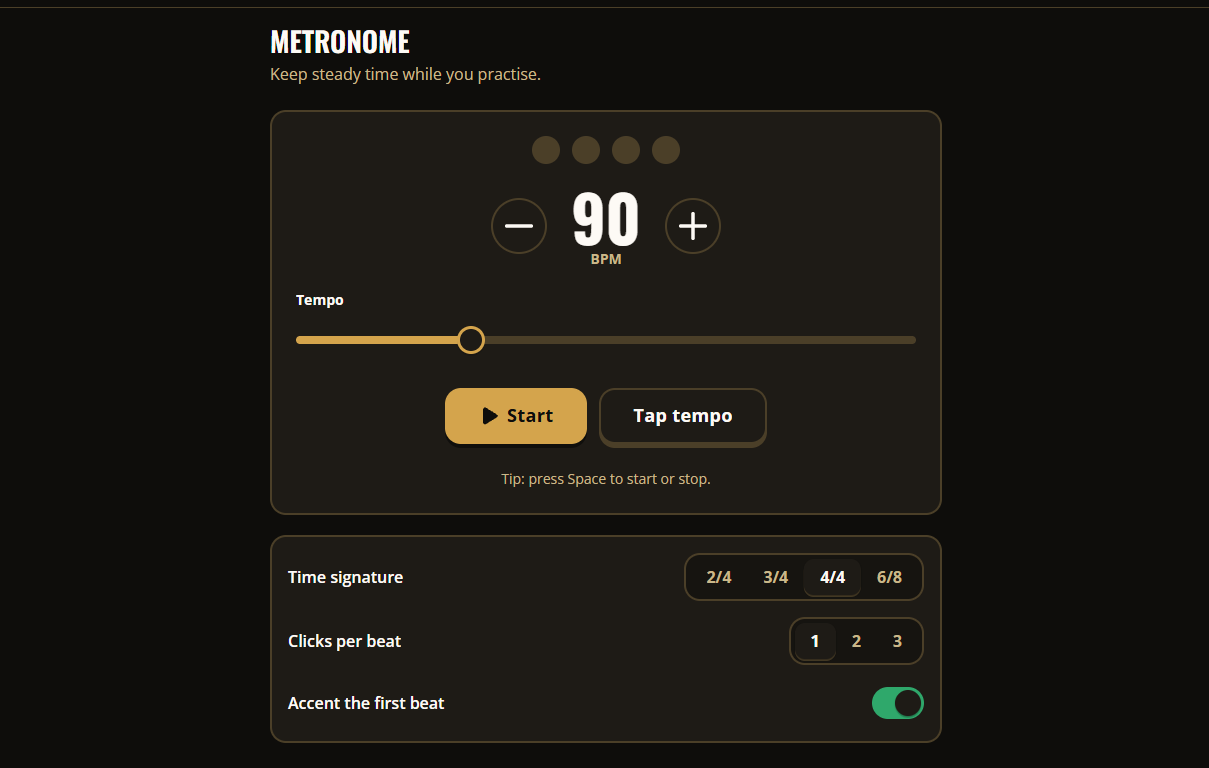
Playing something fast and sloppy teaches your hands to be sloppy. Find the tempo where you can play a passage perfectly three times in a row, then go up 5 BPM. A metronome is the most honest practice partner you’ll ever have.
4. Have one goal per session (and a bigger one per month)
“Get better at guitar” is not a goal. “Play the chord changes in this song at 80 BPM without stopping” is. Set a monthly goal, then pick one small step towards it each day.
5. Write it down
Keep a simple practice log: date, what you worked on, tempo, and one note on how it went. It takes thirty seconds, shows you exactly where you’re improving, and makes it obvious when something isn’t working.
The building blocks of a session
Almost every good routine uses the same four blocks. You just change how much time each one gets.
- Warm-up (10–15%): loosen your hands and get them in sync. See my 7 daily guitar exercises.
- Technique (25–30%): one specific skill, such as chord changes, alternate picking, barre chords or bends.
- Repertoire (40–50%): songs, riffs and solos. This is where technique turns into music.
- Fun and creativity (10%): jam over a backing track, write a riff, improvise. This is the part that keeps you coming back.
The 15-minute routine (busy days and beginners)
- 2 min: tune up, then a chromatic warm-up
- 4 min: one-minute chord changes on two chord pairs
- 7 min: one song or progression, played slowly with the metronome
- 2 min: play anything you like
Fifteen minutes is enough to make real progress if you do it every day. Need a progression to practise? Pick one from my common chord progressions page and play along.
The 30-minute routine (steady improvement)
- 3 min: tune up and warm up (spider or chromatic)
- 7 min: technique focus for the week, for example strumming patterns or alternate picking
- 5 min: chord vocabulary: learn one new chord and use it in a progression
- 12 min: a song you are learning, working on the hardest section first
- 3 min: improvise or play along with a recording
The 60-minute routine (serious progress)
- 5 min: warm-up
- 15 min: technique: two focus areas, about seven minutes each
- 10 min: theory you can play: a scale shape, the notes on the neck, or the chords in a key (the circle of fifths is a great place to start)
- 20 min: repertoire: one new song and one older song you want to polish
- 10 min: creativity: write a riff, improvise over a backing track, or record yourself
Change your focus every few weeks
Your body gets used to any routine. Keep the structure, but change the technique focus and the songs every two to four weeks. A typical cycle could be: strumming and rhythm, then barre chords, then picking and riffs, then fingerpicking. Come back to each one a few months later and you’ll be surprised how much easier it feels.
Record yourself once a week
It’s a bit painful, but nothing shows you the truth like a recording. A phone is enough. Listen back for timing, buzzing notes and gaps between chords. Then compare it with a recording from a month ago. You’ll hear progress that’s impossible to notice while you’re playing.
Make practice easy to start
- Keep your guitar on a stand, in tune and within reach.
- Practise at the same time every day, for example straight after dinner.
- Put your phone in another room, or at least on do-not-disturb.
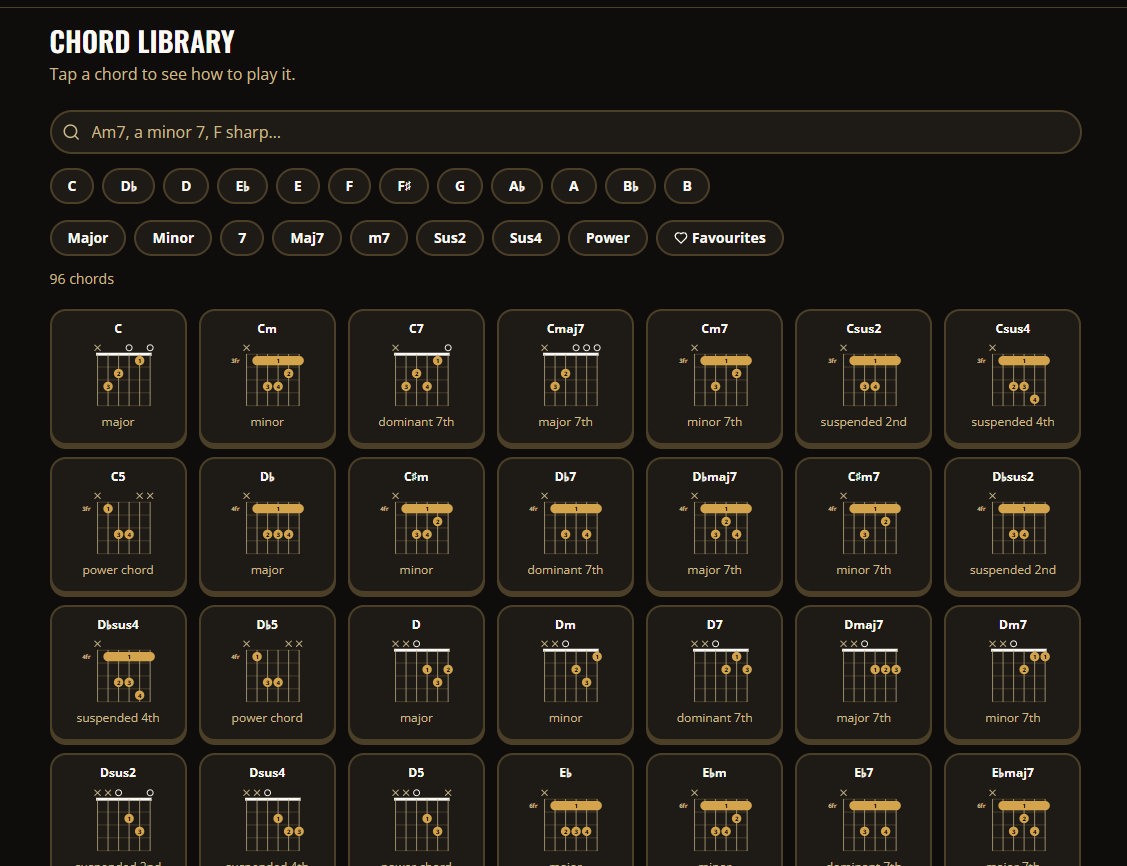
- Keep your tools close: my free guitar tools give you a tuner, metronome, chord library and progressions in one place.
And make sure your guitar is easy to play. Strings that are too high or old make practice harder than it needs to be. If yours fights you, a professional setup will make every practice session more enjoyable.
Already practising regularly but feel stuck? Read how to break through the intermediate guitar plateau.