Every autumn, something quietly changes in guitar cases and on guitar stands across the Netherlands. The heating goes on, the windows stay shut, and a few weeks later players start noticing things. A buzz on the lower frets that wasn’t there in summer. Fret ends that catch your hand when you slide up the neck. Strings that suddenly sit lower, or a guitar that just won’t stay in tune.
It’s not your imagination, and it’s not your playing. Your guitar is reacting to the change of season, and the neck is usually the first place it shows.
Wood Moves. Always.
A guitar neck is made of wood, and wood constantly takes on and gives off moisture to match the air around it. When the air is damp, the wood swells slightly. When the air is dry, it shrinks. Temperature plays a part too, mostly because of what it does to humidity. If you want the full background on this, we covered it in detail in How Humidity Affects Your Guitar: What Every Guitarist Needs to Know.
The Dutch autumn is a strange one for guitars. Outside it’s damp, grey and often well above 80% relative humidity. Inside, once the central heating is running, the air dries out fast and can easily drop to 30 to 35%. Guitars are happiest at around 45 to 55%. So for the next five or six months, most guitars in Dutch homes are living in air that’s drier than they’d like.
What Happens to Your Neck When the Heating Comes On
Inside your neck there’s a steel truss rod. Its job is to balance the pull of the strings so the neck has a tiny, controlled amount of forward curve, called relief. That bit of relief gives the strings room to vibrate without hitting the frets.
When the wood dries out, that balance shifts. The neck tends to lose relief and can even back-bow, curving slightly backwards so the middle of the neck rises towards the strings. The result is buzzing, usually in the first few positions, and notes that choke when you bend.
The fretboard shrinks too, but the metal frets don’t. As the board gets a fraction narrower, the ends of the frets start to stick out past the edge of the neck. This is called fret sprout, and it’s the reason a guitar that felt silky in August suddenly feels like it’s scratching your palm in November.
On acoustic guitars, the top can sink slightly as it dries, lowering the action and adding buzz. In very dry conditions, acoustics are also at risk of cracks in the top or back, which is a far bigger job to fix than a setup.
None of this means your guitar is badly made. Expensive guitars move just as much as cheap ones. It’s simply wood being wood.
Going From Cold to Warm: Let Your Guitar Acclimatise
Autumn also means carrying your guitar in from a cold car, a chilly rehearsal room or a bike ride home. A sudden jump from cold to warm is hard on an instrument. The wood and the finish expand at different rates, which can cause fine cracks in the lacquer (known as finish checking), especially on guitars with a nitrocellulose finish. Condensation can also form on cold strings and hardware.
The fix is simple: when you bring a cold guitar indoors, leave it in its case for 20 to 30 minutes before opening it, so it warms up gradually. And never leave a guitar in the car overnight in autumn or winter.
What an Autumn Setup Involves
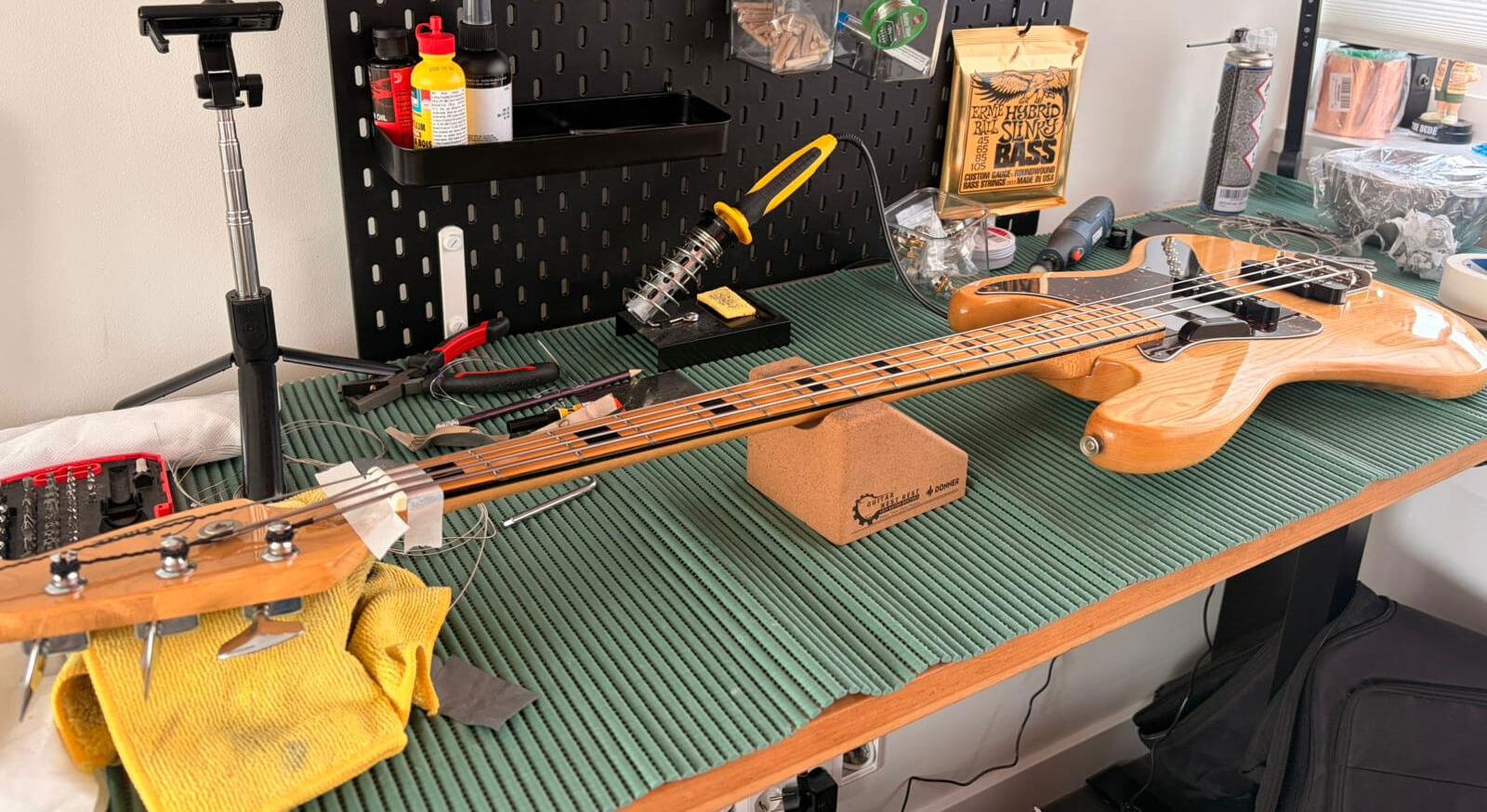
A seasonal setup gets your guitar playing properly in the conditions it’ll actually be living in for the next few months. That means:
- Truss rod adjustment: the neck relief is measured and set to the right amount for your string gauge and playing style, so back-bow and buzzing are gone.
- Action at the bridge and nut: once the neck is right, string height is checked at both ends and adjusted for comfortable playing.
- Intonation: each string is checked and the saddles set so your guitar plays in tune all the way up the neck.
- Fret end dressing: sharp, sprouting fret ends are filed and rounded off so the neck feels smooth again.
- Fretboard conditioning: unfinished fretboards like rosewood and ebony get a protective treatment to help them cope with the dry air.
For that last step we use our own GuitarBuddy Fretboard Wax & Conditioner, which nourishes the wood and leaves a protective layer rather than soaking it. You can read why we prefer it in Why GuitarBuddy Fretboard Wax Is Better for Your Guitar Than Lemon Oil.
How to Protect Your Guitar This Winter
- Keep it away from radiators and heaters. A guitar on a stand right next to the radiator is the classic winter casualty.
- Use a humidifier. A room humidifier helps the whole house, and a small in-case humidifier or two-way humidity pack is a cheap way to protect a guitar that lives in its case.
- Get a hygrometer. A few euros buys you a little digital meter so you actually know what the humidity is, instead of guessing.
- Let it warm up slowly. Cold guitar? Leave it in the case for half an hour before you open it.
- Condition your fretboard. A light treatment at the start of the heating season helps an unfinished fretboard hold up through the dry months.
Time for an Autumn Check-Up?
If your guitar has started buzzing, feels rough along the edges of the neck, or just doesn’t play the way it did in summer, there’s a good chance it simply needs a seasonal setup. A well set-up guitar is easier to play, stays in tune better and is a lot more fun to pick up on a dark winter evening.
GuitarBuddy is based in Zandvoort and works with players across Haarlem, Aerdenhout and Amsterdam. Have a look at our guitar setup and repair services, or book your guitar setup and we’ll get your guitar ready for winter.