Walk into almost any guitar shop, ask what to put on your fretboard, and you’ll get the same answer: lemon oil. It has been the default advice for decades. But most “lemon oil” sold for guitars contains no lemon at all, and what it does contain isn’t doing much for your fretboard.
Here’s what’s really in the bottle, and why we make our own fretboard wax instead.
What’s Actually in Guitar Lemon Oil?
Check the label on a typical bottle and you’ll usually find two things: mineral oil and lemon fragrance.
The scent is there to make the product smell like something. The mineral oil is a refined petroleum product, the same base used in baby oil and many industrial lubricants.
To be fair, mineral oil won’t hurt your guitar. It won’t dissolve the wood or damage the frets. But it isn’t nourishing the wood in any meaningful way either:
- It mostly sits on the surface instead of conditioning the wood fibres
- It wears off fairly quickly, so the fretboard dries out again
- It adds nothing to the long-term health of the wood
- You’re applying a petroleum product to a natural material, over and over, for the life of the guitar
It’s a strange habit when you think about it. Players spend hundreds or thousands of euros on guitars with beautiful rosewood or ebony fretboards, then maintain them with mineral oil and artificial scent.
What Goes Into GuitarBuddy Fretboard Wax
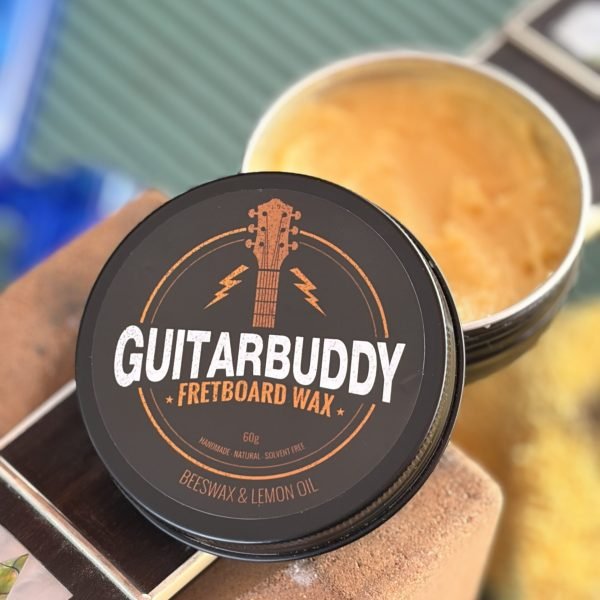
GuitarBuddy Fretboard Wax & Conditioner is handmade in Zandvoort from natural ingredients. No petroleum, no synthetic fragrance, no fillers. Every tin contains:
- Local beeswax (bijenwas) from Zandvoort beekeepers on the North Sea coast
- Jojoba oil, a plant-based oil that’s very similar to the natural oils in wood
- Organic essential oils for a subtle, natural scent
Each ingredient is there because it does something useful for the wood, not because it’s cheap.
Why Beeswax and Jojoba Do a Better Job
It conditions the wood
Jojoba oil works into the grain of an unfinished fretboard rather than just coating it, so the wood is conditioned rather than simply greased. The result lasts longer and feels noticeably smoother under your fingers.
Beeswax leaves a protective layer
Once the oil has soaked in, the beeswax leaves a thin, breathable layer on the surface. That layer:
- Helps lock in moisture so the wood stays conditioned for longer
- Protects against sweat, dirt and changes in humidity
- Gives the fretboard a natural sheen without looking plasticky
This matters in the Netherlands, where humidity swings a lot between a damp summer and a dry, heated winter. Unfinished fretboards like rosewood and ebony can dry out and even crack in the dry months. We explain why in How Humidity Affects Your Guitar and in our post on what heating season does to your guitar neck.
Strings feel smoother
The wax lightly coats the fretboard where your strings make contact, which cuts down friction when you bend and slide. Bends feel smoother and vibrato takes less effort.
It smells good
It sounds like a small thing, but you hold your guitar close. Open a tin of GuitarBuddy Fretboard Wax and the smell is warm and natural, not chemical or artificially fruity.
Made Locally, by Hand
GuitarBuddy is based in Zandvoort, on the Noord-Holland coast, and the beeswax in every tin comes from local beekeepers. When you buy a tin, you’re not buying a mass-produced product shipped in from overseas. You’re supporting a small Dutch guitar business that makes its products by hand.
So if you’ve been looking for a fretboard conditioner in the Netherlands, a lemon oil alternative for your guitar (een lemon oil alternatief voor gitaar), or a bijenwas fretboard wax without petroleum, this is it.
How to Use GuitarBuddy Fretboard Wax
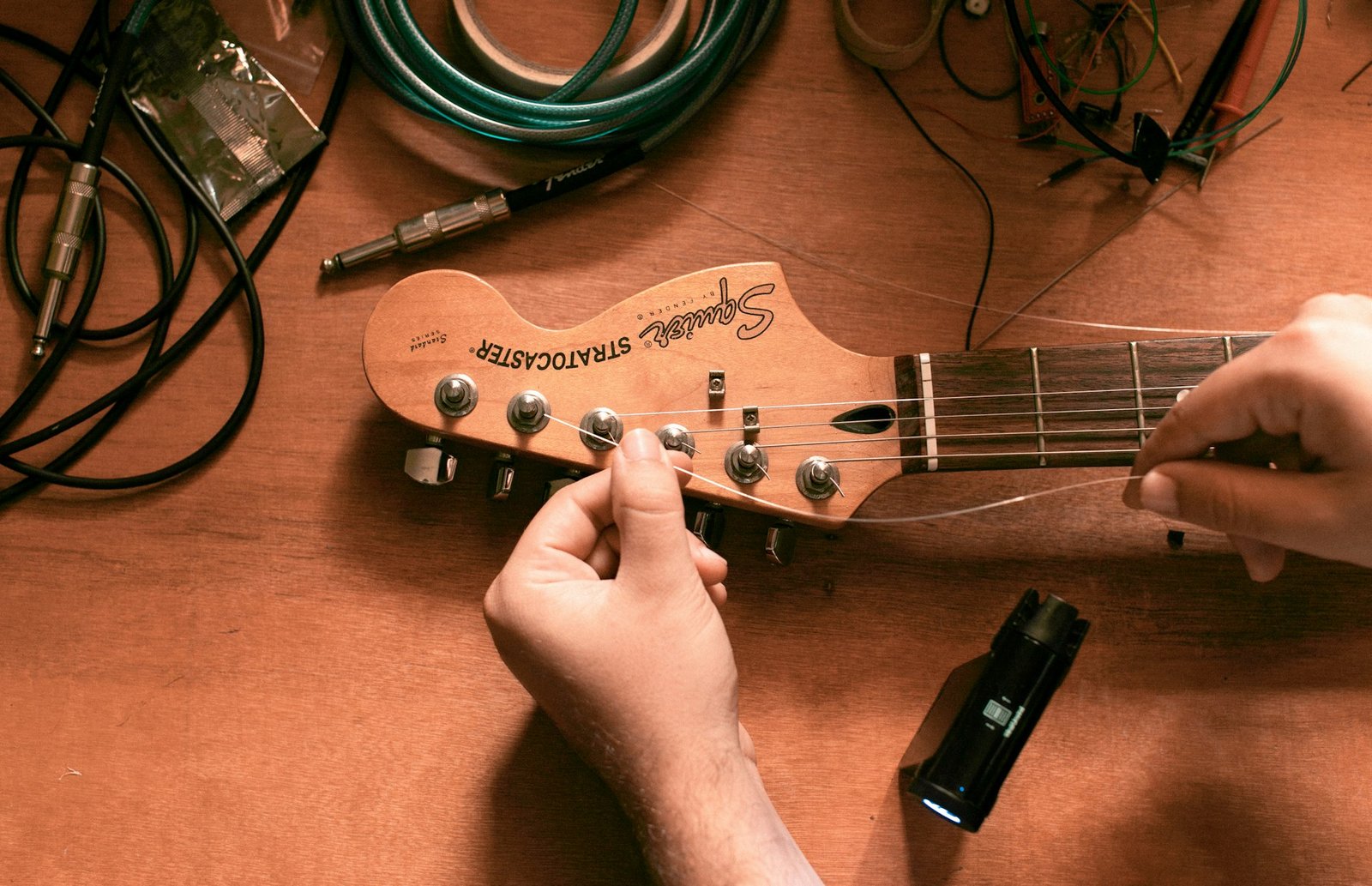
- Loosen or remove the strings so you can reach the whole fretboard
- Apply a small amount of wax with a soft cloth or your fingertip
- Work it into each fret space with small circular movements
- Leave it to soak in for one to two minutes
- Buff off any excess with a clean, dry cloth
- Restring and enjoy the difference
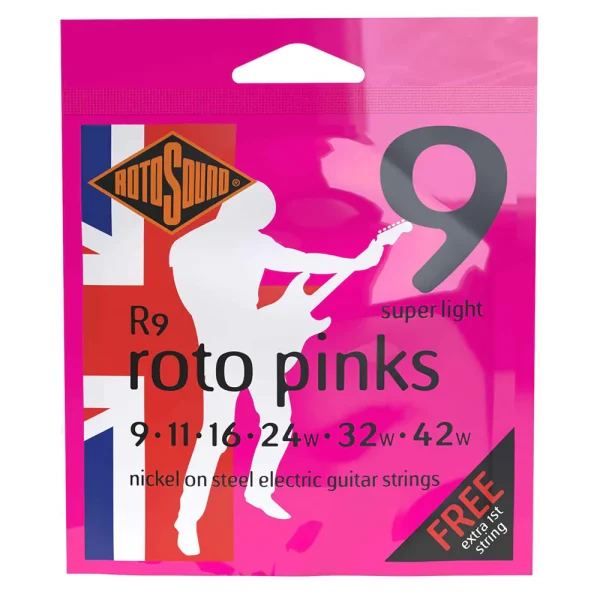
Condition your fretboard every three to six months, or whenever it starts to look or feel dry. A string change is the perfect moment, and if you’re choosing new strings, our guide to choosing guitar strings can help. One tin lasts a long time.
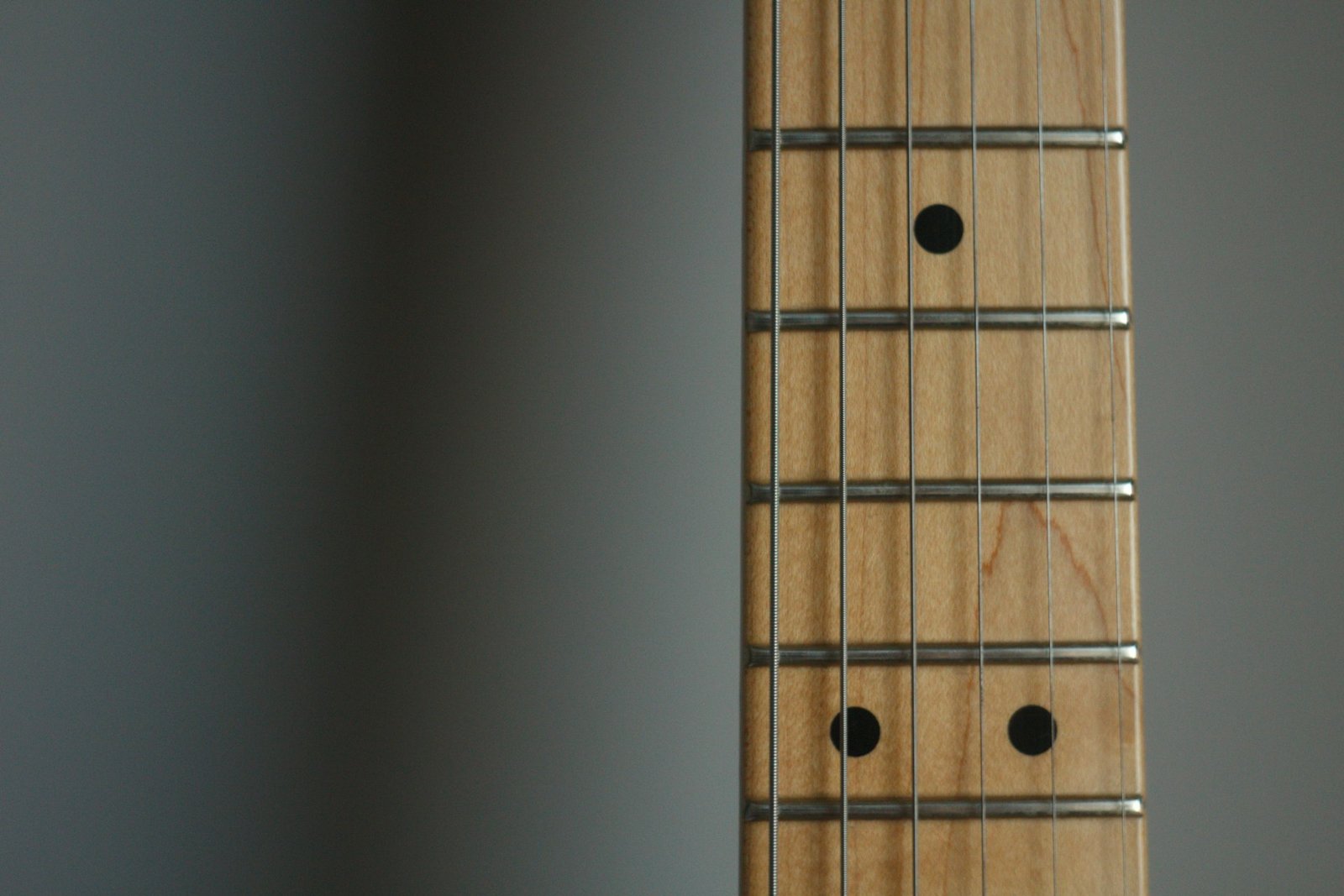
Note: fretboard wax is for unfinished fretboards such as rosewood, ebony and pau ferro. Lacquered maple fretboards don’t need conditioning; a wipe with a slightly damp cloth is enough.
The Bottom Line
Lemon oil became the default mostly out of habit, and because it’s cheap and easy to find. But mineral oil and fragrance don’t really nourish or protect a fretboard.
GuitarBuddy Fretboard Wax is made from natural ingredients that condition the wood, help protect it from drying out, make your strings feel smoother and leave your guitar smelling good. Handmade in the Netherlands, by a guitarist, for guitarists.
Shop GuitarBuddy Fretboard Wax for €16.50 per tin, shipped across the Netherlands.
Want Us to Do It for You?
Every GuitarBuddy setup includes fretboard conditioning, along with fret polishing, a truss rod adjustment, action and intonation. GuitarBuddy is based in Zandvoort and works with players in Haarlem, Aerdenhout and Amsterdam. Take a look at our guitar setup and repair services or book your guitar setup.