Ten minutes of the right exercises at the start of each session does more for your playing than an hour of noodling. These are the seven I come back to myself, and the ones I recommend to anyone who asks how to get better. They work for beginners and experienced players alike. Just adjust the speed.
Two rules before you start. First, use a metronome for everything below; my free online metronome works fine. Second, accuracy before speed. Find the tempo where you can play the exercise perfectly, and only go up by 5 BPM when it feels easy.
1. The chromatic warm-up (1-2-3-4)
The classic. Put your first finger on the 1st fret of the low E string, then play frets 1, 2, 3 and 4 with fingers 1, 2, 3 and 4. Move to the A string and repeat, all the way to the high E. Then come back down.
- Why it works: it wakes up all four fingers, trains finger independence and syncs your two hands.
- Watch for: fingers flying away from the fretboard. Keep each finger hovering close to the string when it’s not pressing.
- Start at: 60 BPM, one note per click. Move it up the neck to the 5th fret if the stretch is too wide.
2. The spider (finger independence)
A harder version of the chromatic exercise. Play frets 1 and 2 on the low E string with fingers 1 and 2, then frets 3 and 4 on the A string with fingers 3 and 4. Move each pair across the strings like a spider walking. Keep the fingers you aren’t using pressed down for as long as possible.
This is uncomfortable at first, and that’s the point. It trains your fingers to move one at a time, which makes chord changes and solos much cleaner.
3. One-minute chord changes
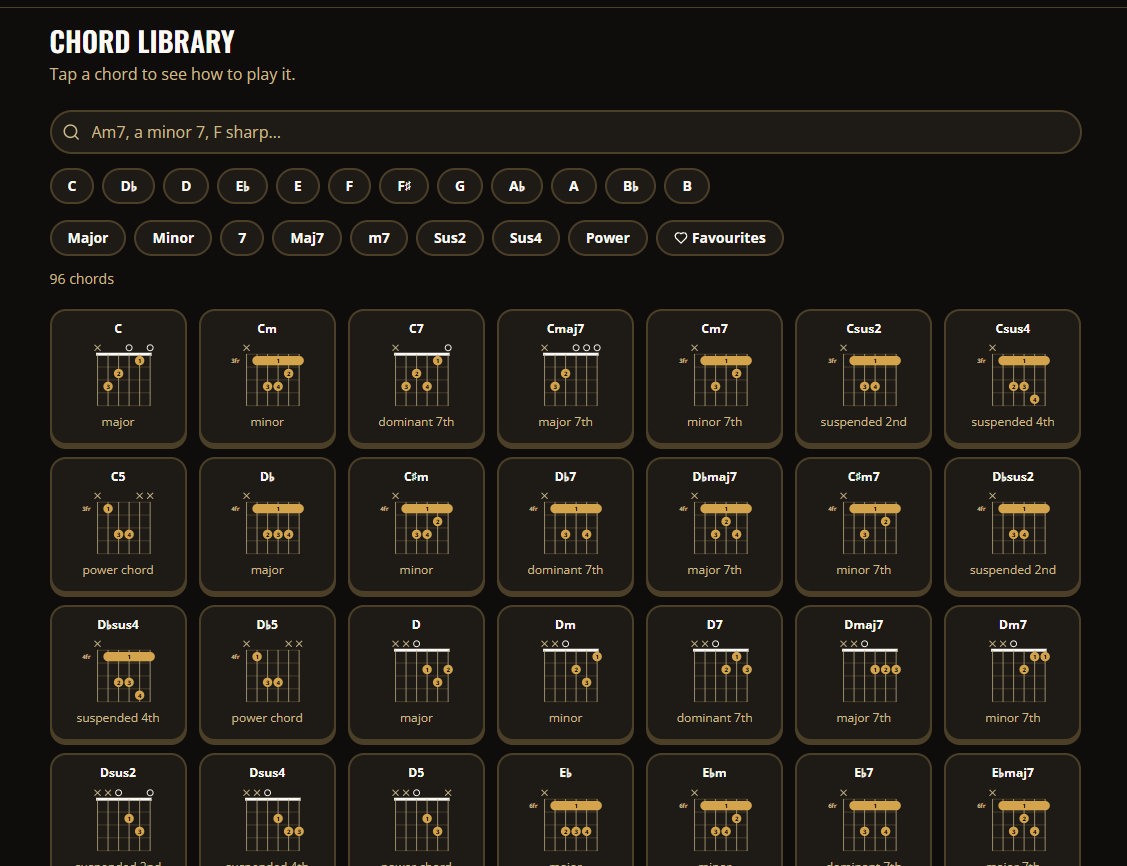
Pick two chords that give you trouble. Set a timer for one minute and switch between them, strumming once per chord. Count your changes and write the number down. Do one or two pairs a day: Em to G, C to Am, D to G, or C to F once you’re ready for it.
No other exercise improves your rhythm playing as fast. It’s simple, measurable and slightly addictive.
4. Strumming on the beat (and off it)
Mute the strings with your fretting hand and strum along with the metronome:
- One down strum on every click.
- Then down-up: down on the click, up halfway between clicks.
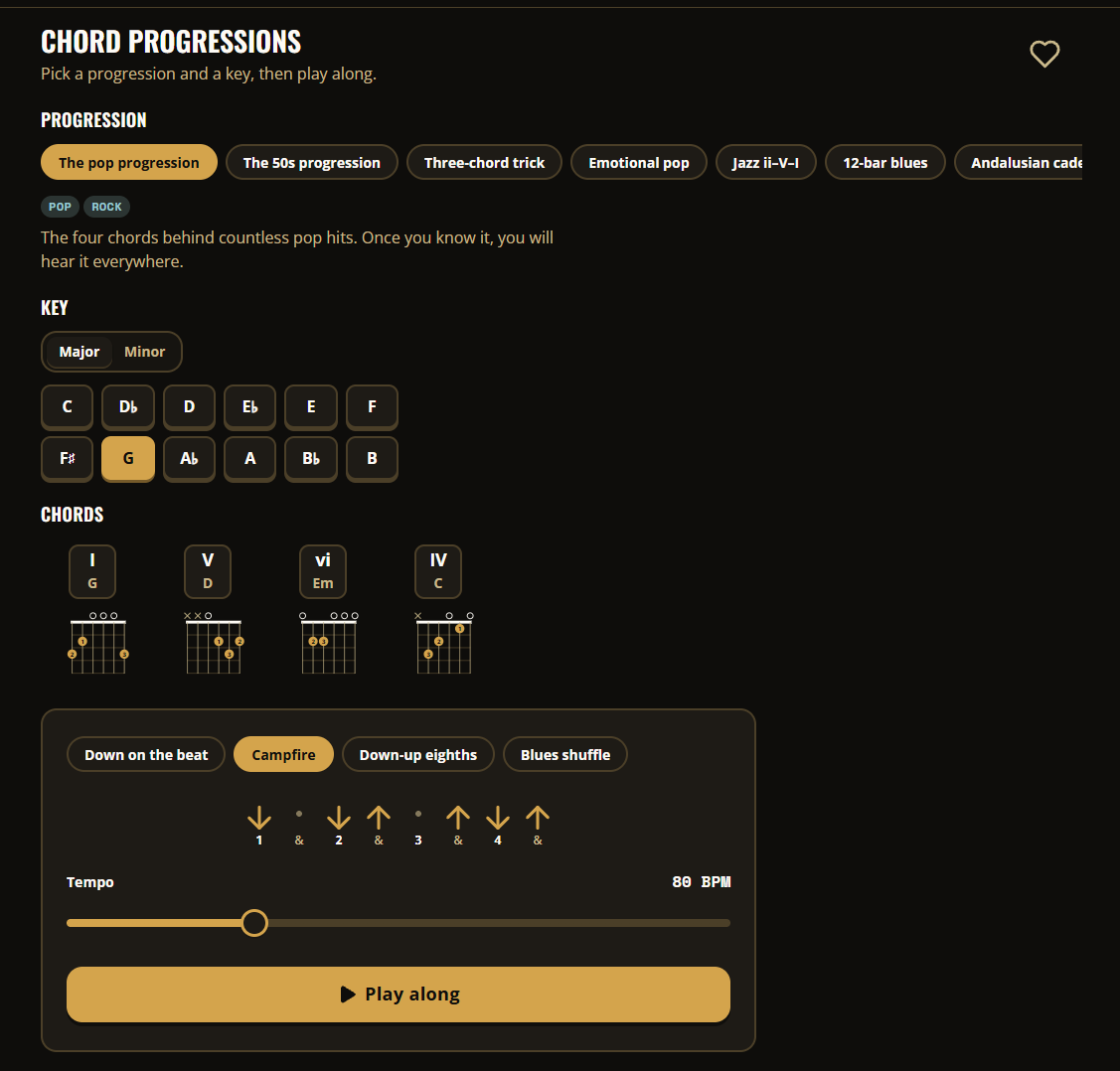
- Then the “campfire” pattern: Down, Down-Up, Up-Down-Up.
Keep your strumming arm moving down and up all the time, like a pendulum, even when you miss the strings on purpose. That constant motion is the secret of good rhythm.
5. Single-string picking with alternate picking
Pick a single note on one string, alternating down and up strokes: down, up, down, up. Play four notes per click, then move to the next string. Make every note the same volume.
When it’s even at a slow speed, play a simple scale like the A minor pentatonic with the same strict down-up pattern. Clean alternate picking is the foundation for riffs, melodies and solos.
6. Clean fretting: one note at a time
Play a chord you know, then pick each string on its own, slowly, from low to high. Does every note ring? If one buzzes or sounds dead, adjust that finger: closer to the fret, more on the tip, thumb a bit lower behind the neck. This 30-second check fixes more “my chords sound bad” problems than anything else.
(If a string still buzzes no matter what you do, it might be your guitar rather than you. That’s exactly what a setup fixes.)
7. Ear training: tune and sing
Before you open the tuner, try tuning one string to another by ear, then check with the online tuner how close you got. Or play a note and hum it. It feels silly, but connecting your ears to your hands is what eventually lets you play what you hear.
Putting it together: a 10-minute daily warm-up
- 2 minutes: chromatic warm-up or spider
- 3 minutes: one-minute changes (two or three chord pairs)
- 3 minutes: strumming or alternate picking with the metronome
- 2 minutes: clean fretting check or ear training
Then spend the rest of your session on music: a song, a progression, a solo. Exercises are the warm-up, not the goal. If you want a full plan for the rest of your session, read how to build a guitar practice routine that works.
Keep track and you’ll keep going
Write down your tempo and your chord-change scores each day. After a month, look back. Seeing that your spider went from 60 to 90 BPM and your G-to-C changes doubled is the best motivation there is.
New to guitar? Start with my beginner’s guide to your first month, or follow the free 30-day course in the GuitarBuddy Play app.