Few things are more frustrating than a guitar that won’t stay in tune. You tune up, play a song and it’s already drifting. Tuning problems almost always have a clear cause, and once that cause is found, they’re usually quick to sort out.
Here are the eight most common culprits, roughly in order of how often we see them.
1. New Strings That Haven’t Settled
Fresh strings stretch for a while, which pulls them flat. That’s normal, and properly fitted, stretched strings settle quickly. If a new set keeps going flat for days, they weren’t fitted and stretched properly.
2. Badly Wound Strings
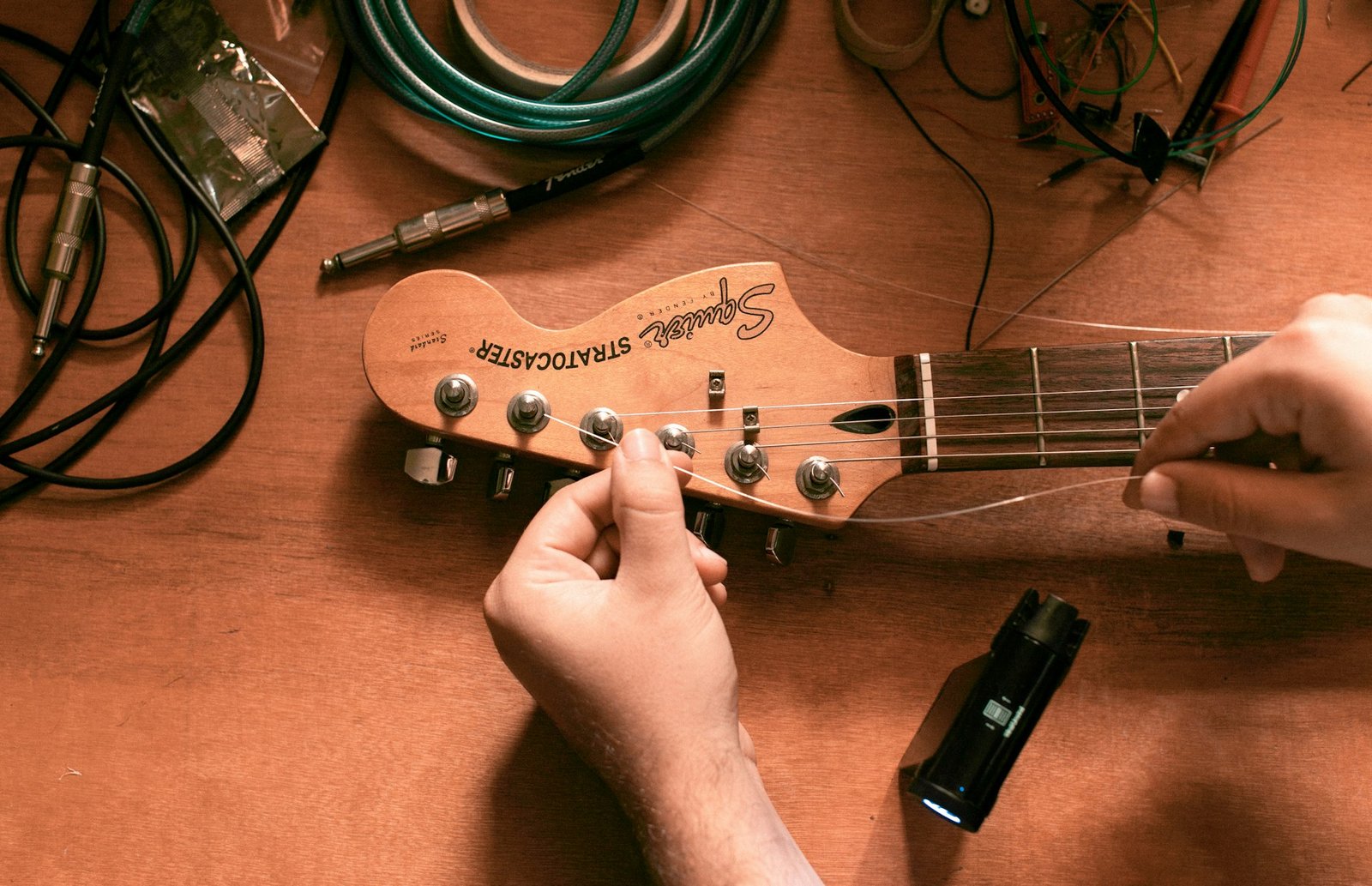
Too few wraps on the tuning post and the string can slip. Too many, crossed over each other, and the wraps settle and shift. It’s one of the first things we look at.
3. The Nut Is Pinching the Strings
This is one of the most common causes. If the strings stick in the nut slots, they bind when you tune or bend, then suddenly release with a “ping” and go out of tune. Signs: a pinging sound while tuning, or a string that goes sharp after a bend and stays there.
The cure depends on the nut: badly cut slots can be dressed and lubricated, and a cheap plastic nut can be replaced with TUSQ, which makes a big difference to tuning stability. We do both as part of our repair services.
4. Old Strings
Strings that are worn, corroded or dirty don’t vibrate evenly and lose their ability to hold pitch. If your strings are more than a couple of months old, they’re the first suspect.
5. Tremolo Problems
A floating tremolo (where the bridge tilts forward) is a balancing act between string tension and the springs in the back. Use the bar and it may not return to exactly the same spot. Getting a tremolo to return to pitch reliably is a matter of the right spring tension, a well-cut nut and smooth pivot points, all checked in a setup.
6. Loose or Worn Tuners
If a tuner wobbles or has play in its gears, the string can slip. Tightening or replacing worn tuners is a straightforward fix.
7. Temperature and Humidity
Strings change pitch with temperature, and the neck moves with humidity. Taking a guitar from a cold car into a warm room is a guaranteed way to go out of tune. Let it acclimatise in its case for 20 to 30 minutes. Read more in How Humidity Affects Your Guitar.
8. It’s Actually Intonation
If the open strings are in tune but chords higher up the neck sound off, the guitar isn’t going out of tune: the intonation is off. Intonation is set at the end of every setup, after the neck and action are right. It’s one of the signs your guitar needs a setup.
Tune the Right Way
A couple of playing habits help too:
- Tune up to the note. If you’re sharp, go below the note and come back up.
- Use a good tuner. A clip-on tuner like the Ernie Ball ProTune is quick and accurate.
- Tune in playing position, not with the guitar lying flat.
Still Drifting?
A setup finds the cause. We check the nut, tuners, bridge and tremolo, fit fresh strings properly and set the intonation. Here’s what happens during a setup. A standard setup is €75 including VAT, and most guitars are ready within 24 to 48 hours.
GuitarBuddy is based in Zandvoort and works with players in Haarlem, Aerdenhout and Amsterdam. Book your guitar setup.