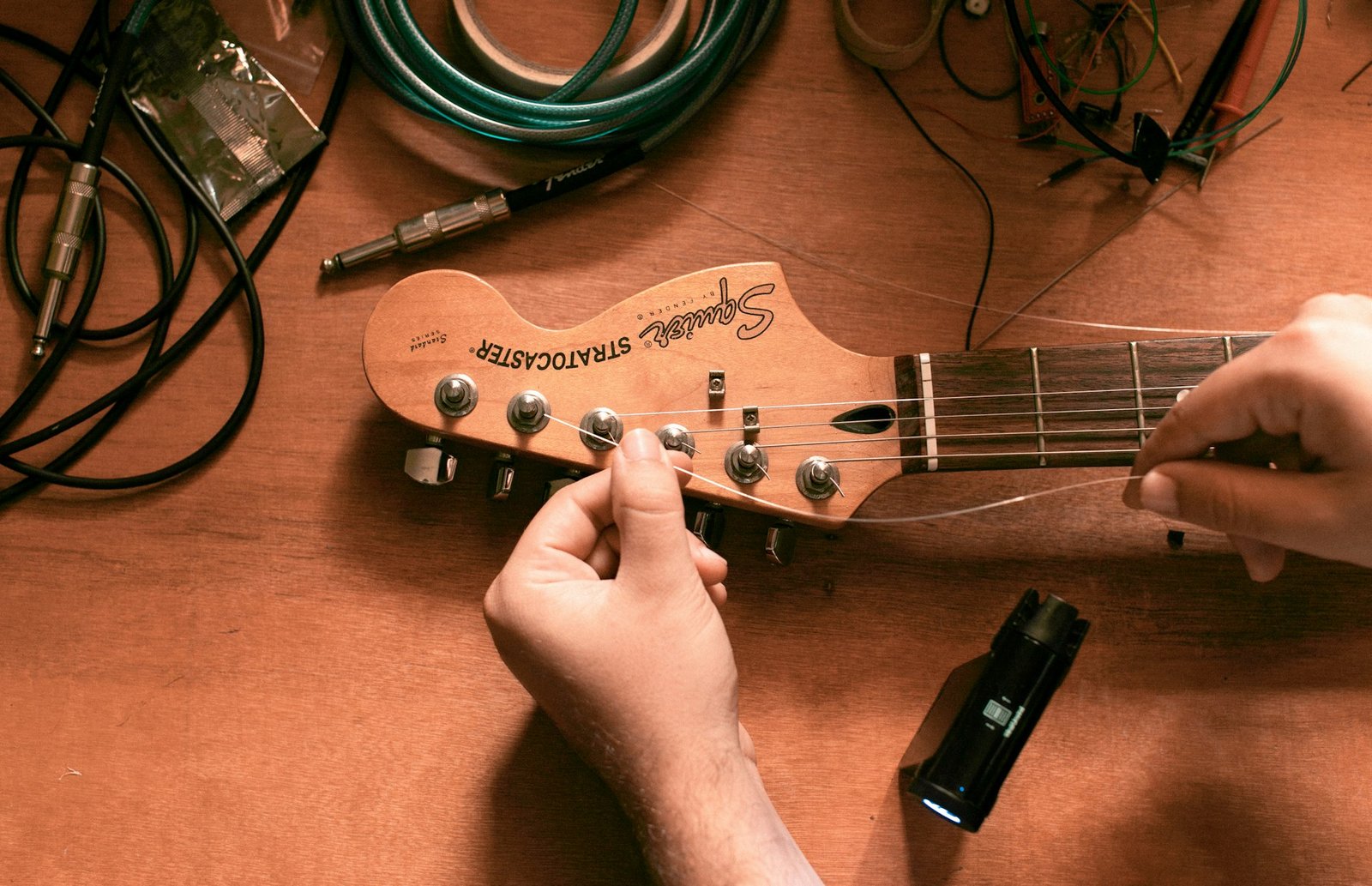
Armed with a German court ruling, Fender has sent cease and desist letters to boutique builders around the world, and the guitar community is furious.
For decades, the double-cutaway S-style body has been one of the most copied guitar shapes on the planet. From cheap beginner guitars to hand-built boutique instruments costing thousands, the shape Leo Fender drew in the early 1950s has become part of the shared language of the electric guitar. In Europe, at least, that assumption may now be falling apart.
In March 2026, Fender won a landmark ruling at the Regional Court of Düsseldorf in Germany. The court declared the Stratocaster body shape a “copyrighted work of applied art“: not just a trademark, but protected creative work. The ruling covers any guitar made, sold or distributed in the European Union. Within weeks, Fender’s law firm Bird & Bird began sending cease and desist letters to builders, demanding they stop production, recall unsold stock, hand over sales figures and pay damages.
How Did We Get Here?
Fender has tried to protect its body shapes before. In the United States, its attempt to register the Stratocaster, Telecaster and Precision Bass bodies as trademarks failed in 2009, largely because the shapes had been copied so widely for so long that they were seen as generic.
Copyright is a different route. Rather than arguing that the shape identifies Fender as a brand, the Düsseldorf ruling treats the body itself as a protected artistic design. That’s what makes it so significant, and so controversial.
A Default Judgement Used as a Battering Ram
The nature of the Düsseldorf ruling matters. This was not a long, contested case where a judge weighed arguments from both sides. The defendant, a Chinese manufacturer selling near-identical cheap copies on AliExpress, simply didn’t show up. Fender won by default.
Legal observers say that makes it far from certain the ruling would hold up against legitimate boutique builders who choose to fight it. Even so, the cease and desist letters demand that builders stop production, recall and destroy unsold stock, provide full sales data and pay compensation, all based on a ruling won against a defendant who never appeared.
Fender is clearly treating the ruling as the foundation for a wider campaign. The Bird & Bird letters argue that because the court found the Strat body to be protected by copyright, any guitar body that is “not less similar” to the Stratocaster now infringes it, and builders must either comply or go to court.
Why Boutique Builders Are in the Firing Line
This is where it gets troubling for independent builders. The high-volume copy factories are largely out of practical reach: they don’t appear in court and carry on regardless. The builders actually receiving letters are small, often family-run workshops making premium, hand-built instruments with their own designs, materials and craftsmanship.
LsL Instruments, one of the builders named, has launched a GoFundMe to pay for its legal defence, saying that complying would effectively end the business.
For European builders and sellers, the situation is even more serious. The ruling covers any guitar sold in or imported into the EU. In theory, a builder in the Netherlands, Germany or the UK selling an S-style guitar online to a customer in Amsterdam or Haarlem could be in breach.
The PR Fallout Has Been Severe
The guitar community’s reaction has been fast and overwhelmingly negative. Well-known guitar YouTubers have publicly cut ties with Fender, and Guitar World called it “a PR disaster for the ages.”
The criticism isn’t only about the legal strategy. Many players see a private-equity-backed Fender using an opportunistic default judgement to squeeze out the very builders who represent the passion and craft that make guitars worth caring about.
Some also point to the timing. Fender has faced growing criticism over the quality and direction of its instruments, while boutique builders have thrived by offering what many players feel Fender no longer does. Going after those builders looks, to many, like protecting market share rather than a creative legacy.
What Happens Next?
Nobody knows yet. The EU ruling is real, but whether it can be enforced against well-funded builders who fight back is untested. Fender’s campaign in the US stands on weaker ground, given the failed trademark attempt and US courts’ long-standing view of classic guitar shapes as generic.
What seems clear is that Fender intends to push this as far as it can. Whether that reshapes the guitar market or turns into an expensive overreach that gets knocked back in court will depend on whether enough builders have the money and the will to fight.
What It Means for Guitar Owners
If you already own an S-style guitar from another brand, nothing changes for you: the dispute is about building and selling new guitars, not owning or playing them. Your guitar still needs the same care as any other, and we set up and repair all brands, Fender or not.
For anyone building, selling or buying S-style guitars in Europe right now, this is a story to watch closely. We’ll keep following it here on the GuitarBuddy blog.